

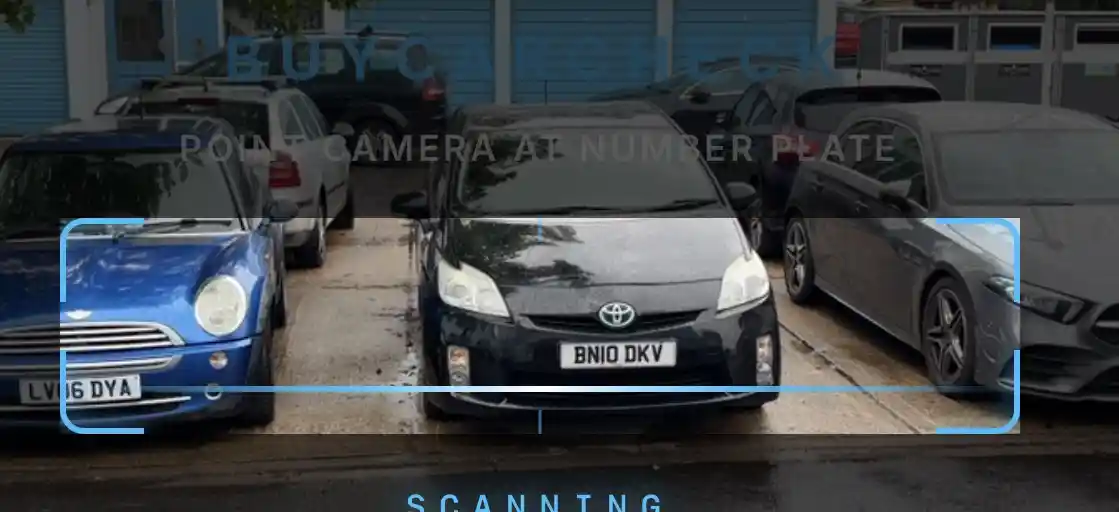
BuyCarCheck has shipped camera-based number plate recognition on mobile. Users can point their phone at any UK plate to pre-fill the vehicle search field automatically. No typing required. The feature uses on-device optical character recognition with no image upload and no server round-trip.
What the Feature Does
On mobile, a camera icon appears alongside the BuyCarCheck search input. Tapping it opens a camera view. The user points their phone at a UK number plate; the registration is read automatically, validated, and dropped into the search field. The user confirms with a single tap and the vehicle check begins.
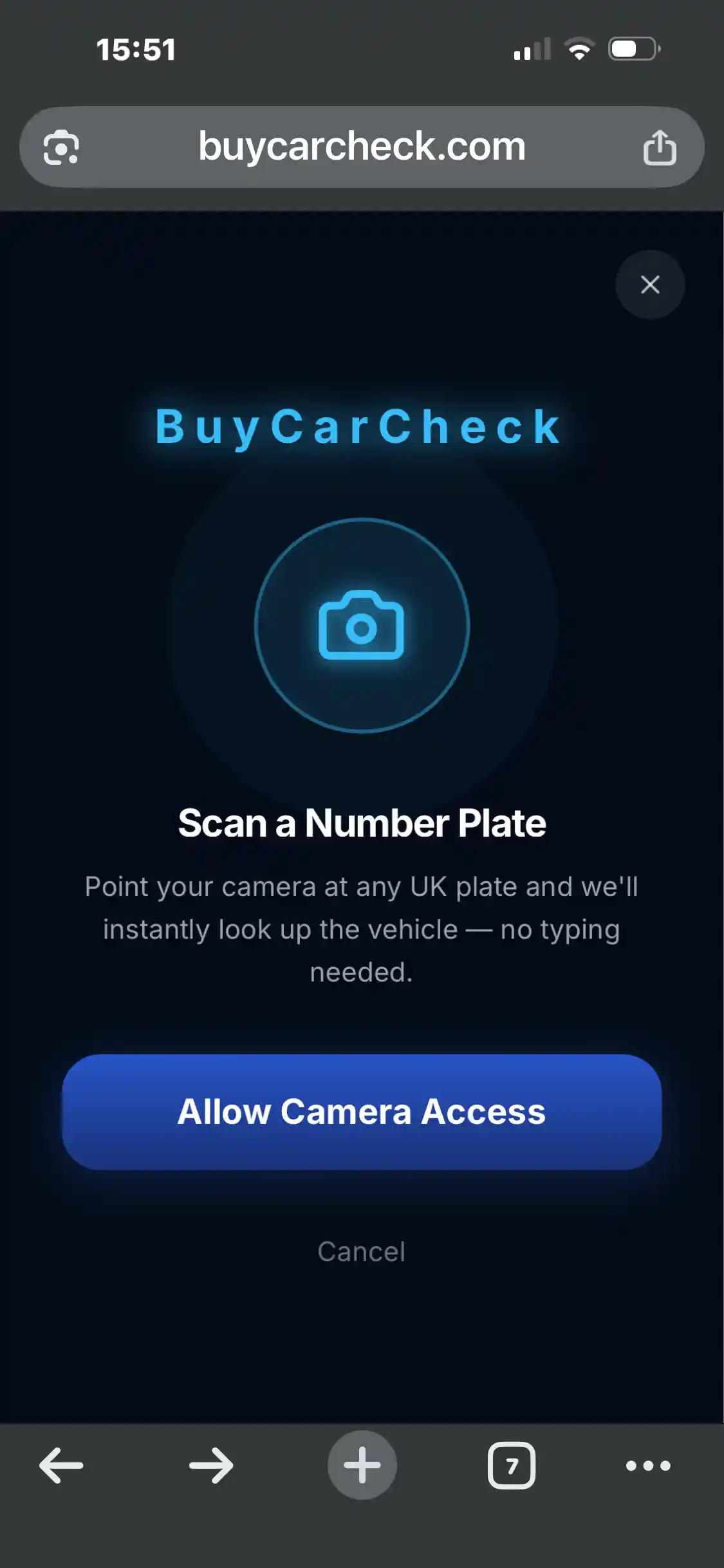
If the camera is unavailable — older hardware, denied permission, or low OCR confidence — the standard text input field remains active with no error state shown to the user. The feature degrades silently and gracefully; manual entry is always available as the default path.
The scanner is integrated directly into the existing search flow. There is no separate mode, no additional screen, and no change to the check pipeline that follows. From the user's perspective, plate entry is simply faster on mobile.
The feature is live in the current BuyCarCheck build at buycarcheck.com.
Why It Was Built
Manual plate entry on mobile is error-prone. A UK number plate is seven characters in a specific format, typed on a small keyboard, often outdoors, often under time pressure. Transposition errors and misreads cause failed lookups. A failed lookup means no check, which is the worst outcome for a consumer buying a used vehicle.
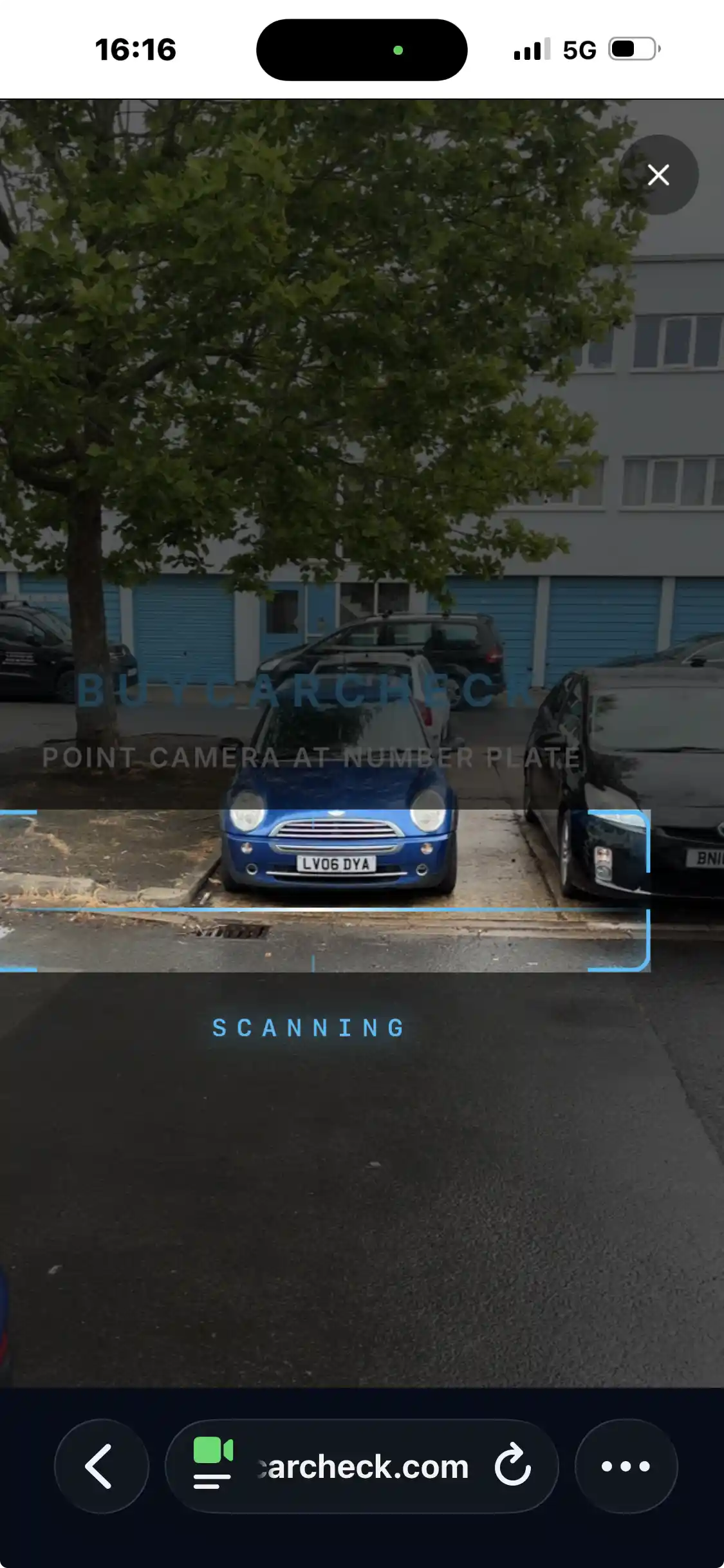
The primary driver for the feature was reducing lookup failure rates caused by manual entry errors on mobile devices. Secondary objectives were reducing the time-to-result and removing friction at the point in the user journey most likely to cause drop-off — the search input itself.
UK number plate formats are well-defined and regex-validatable, which makes them well-suited to on-device recognition with a validation layer. The combination of a constrained character set, a fixed structure, and a high-contrast physical format (white or yellow retroreflective plate, black characters) makes reliable recognition achievable within normal mobile camera conditions.
“The primary driver was reducing lookup failure rates caused by manual entry errors on mobile.”
Technical Implementation
The scanner uses browser-native image recognition capabilities where supported, with a fallback implementation for devices that do not expose the required APIs. All processing occurs in the browser context on the device; no frames or images are sent to zoopbyte or BuyCarCheck infrastructure.
Raw recognition output is passed through a validation layer before being accepted. The validator checks the candidate string against the full set of current UK number plate formats and applies a confidence threshold. Candidates that fall below the threshold, or that do not match a valid format, are discarded and the user is prompted to try again rather than a malformed registration being silently passed into the check pipeline.
The integration point is the existing search component. The plate scanner writes its validated output directly to the same field used by manual entry, ensuring the downstream vehicle lookup logic requires no modification.
| Layer | Technology |
|---|---|
| Recognition | On-device OCR via browser-native APIs; no images transmitted |
| Validation | UK plate format matching with confidence threshold gating |
| Privacy | Zero server round-trip for image data; no frames persisted |
| Fallback | Silent degradation to manual text entry; no error state shown |
| Integration | Direct write to existing search input — no pipeline changes required |
Planned Improvements
Scan success rates are being monitored across device types and ambient lighting conditions. Confidence thresholds will be tuned based on production data from the initial rollout.
Further input points where camera recognition may reduce friction — including MOT reminder sticker formats and V5C document fields — are under evaluation.